REVIEW · ISTANBUL
Sunset or Daytime Istanbul Guided Luxury Yacht Cruise with Snacks
Book on Viator →Operated by Istanbul Express Travel · Bookable on Viator
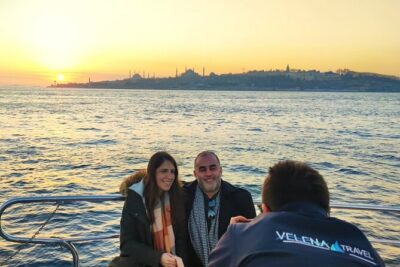
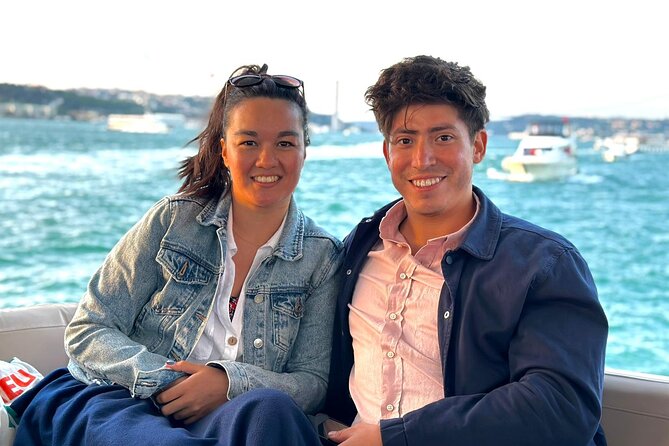
Sunset on the Bosphorus hits different from the water. I like how this cruise gives you live context on both sides of Istanbul while you float past palaces, fortresses, and bridges aboard a glass-encased yacht. The timing works whether you go at night for the glow or during the day for sharp skyline views.
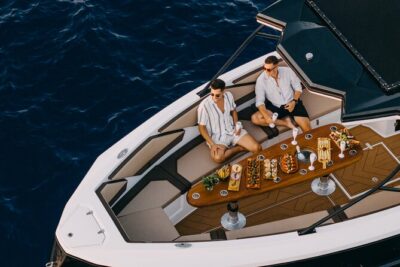
Second, I’m a fan of the onboard snack setup: baklava-style cookies, canapés, fruit, and tea and coffee included, plus lemonade or juice depending on the season. It’s the kind of small treat that makes the 2 hours feel extra relaxed instead of rushed.
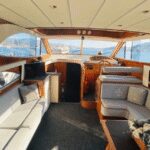
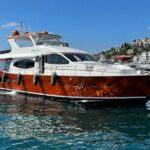
One thing to consider: set expectations for comfort, not a private superyacht. The “luxury” label is really about the experience flow and onboard feel, and a smooth departure depends a lot on finding the exact meeting dock on time.
In This Review
- Key things to know before you sail
- Two hours of Bosphorus views: what the cruise is really like
- Meeting point in Beyoğlu: arrive early and look sharp
- Dolmabahçe Palace from the water: a 19th-century power statement
- Ortaköy and the European shoreline: villages between Beşiktaş and Kuruçeşme
- Bosphorus Bridge and the Ortaköy-to-Beylerbeyi connection
- Rumeli Hisarı: the Ottoman fortress you can almost feel
- Fatih Sultan Mehmet Bridge: a second crossing with big scale
- Anadolu Hisarı on the Asian side: ruins, restoration, and real waterfront living
- Çırağan Palace: marble grandeur with a dark political past
- Beylerbeyi Sarayı: summer residence comfort with palace-level details
- Maiden’s Tower: the legend that turns a tower into a story
- A note on what you hear: older names and pier references
- Food and drinks: what the snack service actually adds
- The live guide experience: English narration that helps you spot meaning
- Small-group feel: easier sightlines and a more relaxed pace
- Timing tips: choose sunset for the glow, daytime for clarity
- Price and value: why about $24 feels reasonable (and when it might not)
- Who this cruise suits best
- Should you book this Bosphorus yacht cruise?
- FAQ
- How long is the Istanbul yacht cruise?
- What is the price per person?
- Is the tour offered in English?
- What’s included with the cruise?
- Are hotel pickup and drop-off included?
- Where do I meet for the tour?
- Is the ticket mobile?
- What if the weather is bad?
- How many people are on the cruise?
Key things to know before you sail
- Both European and Asian highlights in one 2-hour stretch, guided in English
- Sunset photo timing for landmark lighting over the water
- Dolmabahçe to Ortaköy shoreline: palace grandeur plus real neighborhood character
- Ottoman fortresses at the Bosphorus bottleneck: Rumeli Hisarı and Anadolu Hisarı
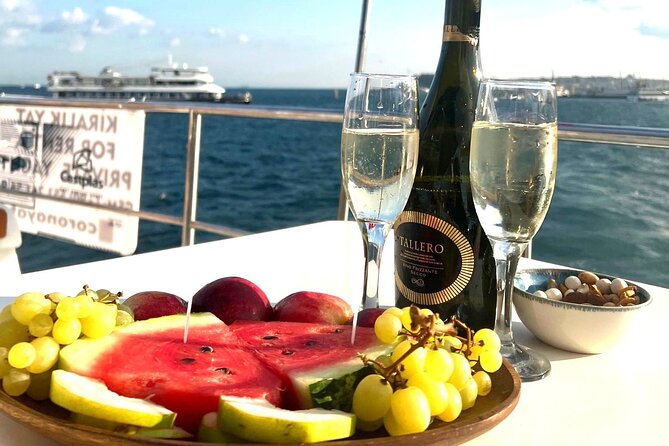
- Baklava cookies, fruit, canapés, tea, and coffee included during the cruise
- Maximum 36 travelers plus a mobile ticket for easier check-in
Two hours of Bosphorus views: what the cruise is really like
This is a guided cruise designed for short attention spans and big photo goals. You’re out on the Bosphorus for about 2 hours, with the city turning from daylight detail into evening glow (or just crisp daytime city lines, if you go earlier).
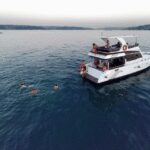
The boat is glass-encased, which helps if the wind is annoying or the weather shifts. You’ll also get live commentary in English, so you’re not just looking at buildings—you’re getting the “why this matters” thread as you pass.
You can also read our reviews of more tours and experiences in Istanbul.
Meeting point in Beyoğlu: arrive early and look sharp
The meeting point is at Kethüda Yahya Ağa Çeşmesi near Arap Camii on Makaracılar Cd. in Beyoğlu. That’s not a vague hotel drop-off, so I recommend you build in extra time to walk the last few minutes and confirm you’re at the right dock.
A near-public-transport location helps if you’re hopping around Istanbul already. You’ll also have a mobile ticket, so you can focus on getting there rather than printing anything.
Dolmabahçe Palace from the water: a 19th-century power statement
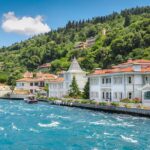
As you head along the European side, you’ll line up views tied to Dolmabahçe Palace. The palace was built in the 19th century under Sultan Abdulmecid, then became a Presidential Residence after the Republic formed, and later shifted into a museum role after diplomatic use ended.
From the Bosphorus, Dolmabahçe reads like what it is: a reminder that Istanbul has always been a doorway—political, strategic, and visual. Even if you don’t go inside the museum on this day, the cruise helps you understand why the building grabs attention from across the water.
Ortaköy and the European shoreline: villages between Beşiktaş and Kuruçeşme
Your guide will also point out how the coastline on the European side looks like a chain of distinct villages. Ortaköy sits between Beşiktaş and Kuruçeşme, and the whole area has that in-between vibe the name suggests (orta köy = middle village).
This part matters because it changes your perspective. Istanbul isn’t one big postcard scene—it’s lots of small identities along the same waterline. From the boat, you can actually see how neighborhoods stack next to each other along the Bosphorus.
Bosphorus Bridge and the Ortaköy-to-Beylerbeyi connection
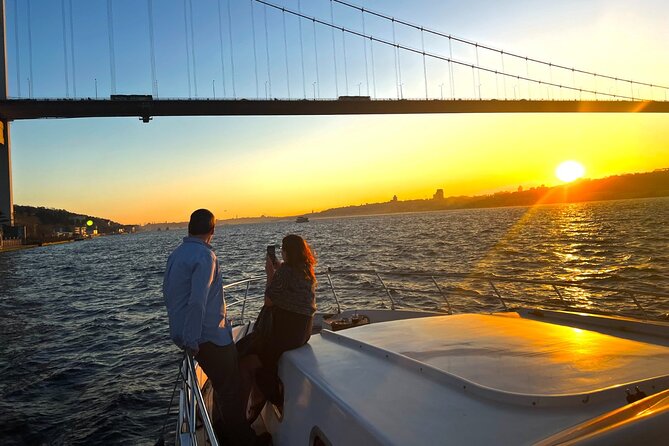
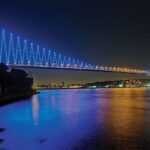
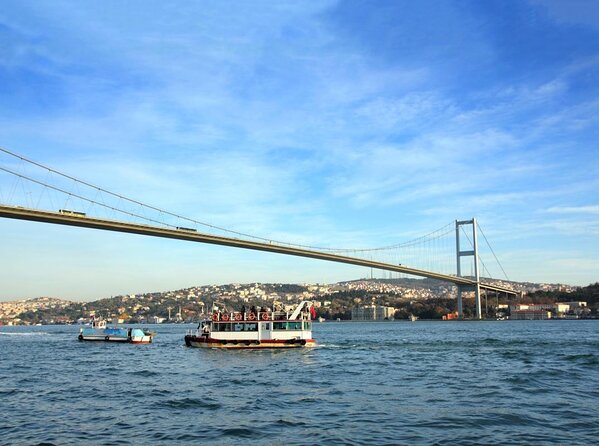
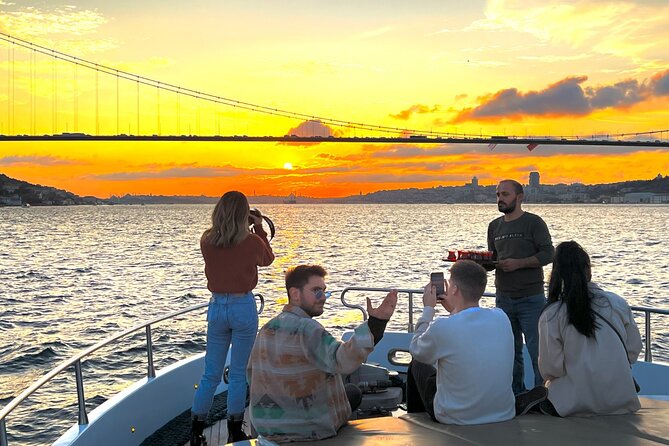
You’ll see the Bosphorus Bridge too, the one connecting Ortaköy on the European side to Beylerbeyi on the Asian side. The cruise angle makes the bridge feel less like a road crossing and more like a symbol: the city’s two halves literally tied together over the strait.
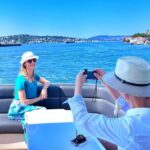
If you’re chasing photos, this is a strong moment because the bridge sits over a wide slice of water. That gives you options for framing the skyline as a layered composition instead of a single flat view.
- Bosphorus Yacht Cruise with Stopover on the Asian Side – (Morning or Afternoon)
★ 5.0 · 1,657 reviews

Rumeli Hisarı: the Ottoman fortress you can almost feel
Rumeli Hisarı (Rumeli Castle) is one of the key stops the cruise emphasizes. It dates to 1452, built by Ottoman Sultan Mehmed II as preparation for the conquest of Constantinople. It also sits at the Bosphorus shore at one of the strait’s narrowest stretches—about 660 meters.
That “narrow point” detail is more than trivia. It explains why fortresses mattered here: whoever controlled this squeeze controlled movement, trade, and military power. Seeing it from the water gives you a better sense of how defensible this shoreline was, even if you never set foot on the ramparts itself.
Fatih Sultan Mehmet Bridge: a second crossing with big scale
Later you’ll also pass views tied to the Fatih Sultan Mehmet Bridge, a suspension bridge connecting Kavacık and Hisarüstü. Since it’s the second major Bosphorus bridge, it helps you compare the two crossings—different feel, different scale, same strategic job.
This is a good stretch to watch the city change as you move. Bridges break up the waterfront into “zones,” and your brain starts grouping landmarks faster after you’ve seen one crossing clearly.
Anadolu Hisarı on the Asian side: ruins, restoration, and real waterfront living
If you want the cruise to feel like more than a quick European shoreline loop, Anadolu Hisarı is part of the payoff. The fortress sits at the Asian-side Bosphorus narrow point in Beykoz. It was built in 1395 by Beyazıt I and includes a citadel plus exterior castle walls.
After the conquest, it lost some military importance and was converted into a military hospital. Restoration work ran from 1991 to 1993, and today the area functions like an open-air museum, though you can’t access everything—outer walls are what you’ll see more easily, with a road passing through the area.
From the yacht, it’s a different kind of “look.” You’re not walking inside ruins; you’re watching how the fortress sits among the waterfront’s daily life. That’s often the real value for Bosphorus cruises: seeing how history and living neighborhoods share the same shoreline.
Çırağan Palace: marble grandeur with a dark political past
Çırağan Palace adds drama to the scenery. It was commissioned by Sultan Abdulaziz and designed by Sarkis Balyan. Construction finished in 1871, and it covered about 80,000 square meters in marble.
The palace has a heavy chapter too: after Abdulaziz was deposed, he was imprisoned there for years with his family. Murat V was also imprisoned there after his deposition for about 29 years. Later, after 1908, the palace was used as the House of Parliament, then damaged by fire in 1910. The grounds later became part of Besiktas Sports Club and even served as Şeref Stadium for a time. In the early 1990s it reopened as a luxury hotel after restoration.
On a cruise, you won’t get the full experience of the building like you would with a dedicated visit. Still, the guide’s explanation makes the sight feel like more than a pretty facade. It becomes part of Istanbul’s political geography: who lived, who ruled, and who fell.
Beylerbeyi Sarayı: summer residence comfort with palace-level details
Beylerbeyi Palace is presented as an imperial summer residence commissioned by Sultan Abdulaziz. It’s described as having 24 rooms, 6 halls, and a hamam—exactly the kind of planning that signals “this was built to host power” rather than just to live in.
The palace also fits the Bosphorus theme nicely: Istanbul’s rulers treated the water like their own front garden. You get to see that calm, ceremonial side of the city from a moving platform.
Maiden’s Tower: the legend that turns a tower into a story
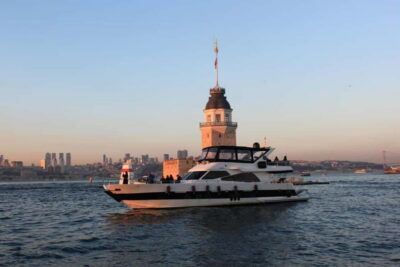
Maiden’s Tower (Kız Kulesi) is one of the most memorable sights on the route, and the tour leans into its legend. The story says a Byzantine emperor heard a prophecy that his daughter would die at age 18 by a snake, so she was placed in a tower built on a rock isolated from the land—so no snake could reach her.
That myth gives the tower an extra layer. From the yacht, the tower isn’t just a landmark—it’s a story object, sitting right where the strait makes everything visible and isolating at the same time.
A note on what you hear: older names and pier references
As you cruise, the guide may also point out pier or shoreline references tied to older spellings and names found in historical sources, including variations like Hallai/Challae/Khile. Even if you don’t catch every term on the first pass, you’ll notice how the commentary connects the waterfront to older records and language.
If you care about detail, try to face forward during the guide’s key sentences so you can listen as the boat lines up with the relevant shoreline.
Food and drinks: what the snack service actually adds
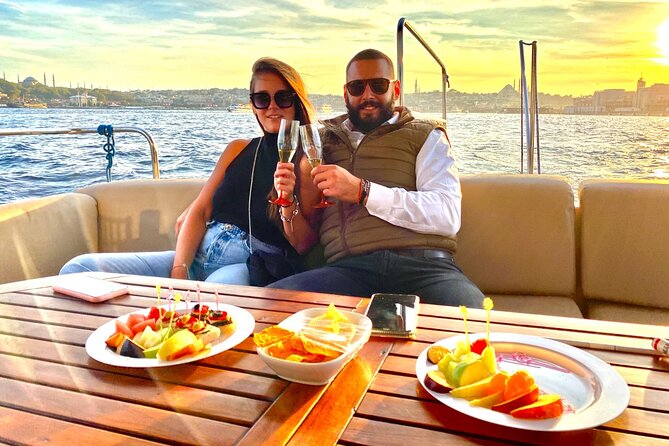
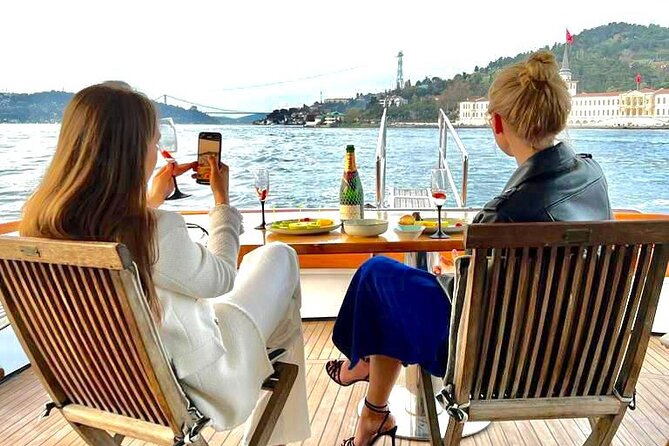
This is where the cruise earns easy points. Included snacks are canapés, Turkish tea and coffee, and a fruit plate made fresh each day. There are also cookies tied to baklava (the sweet, flaky vibe you can count on in Turkey) and seasonal lemonade or fresh fruit juice depending on the time of year.
The value isn’t just in the taste—it’s in the pacing. You’re fed while you’re moving, so you don’t need to plan a separate meal or detour for snacks. For a short 2-hour cruise, that convenience is a real quality-of-life perk.
The live guide experience: English narration that helps you spot meaning
A lot of cruise tours list landmarks. This one tries to help you understand why those landmarks were placed where they were. The guide’s job is to connect architecture and power: palace to politics, fortress to defense, bridge to unity and movement.
In past departures, I’ve seen names like Robert come up as the person behind the narration. When the sound system works and the pace stays steady, it’s a great way to learn quickly without switching museums or booking extra tickets.
Small-group feel: easier sightlines and a more relaxed pace
The group size cap is 36 travelers, and that tends to keep the boat from feeling like a floating bus. One of the consistent advantages here is space—more room to move toward a window or step into a better viewing position for photos.
Also, the cruise length is short enough that you don’t feel trapped. You get “high points” without a long sit that turns into hunger or boredom.
Timing tips: choose sunset for the glow, daytime for clarity
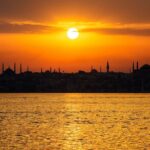
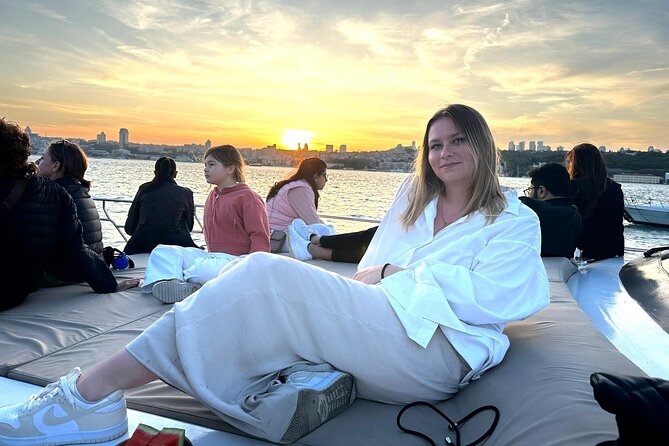
If you go for sunset, you’re basically buying the changing light on water—city lights starting to pop, and landmark silhouettes sharpening as the sky darkens. The boat’s glass-encased design can help you enjoy that without being completely exposed.
Daytime sailing can be a smart alternative. On clear weather days, you’ll often get cleaner views for architectural details, bridge structures, and the shoreline’s layout.
Price and value: why about $24 feels reasonable (and when it might not)
At around $24.19 per person for about 2 hours, this cruise is priced like a value-friendly Bosphorus option. You’re not just paying for the boat ride; you’re paying for guided interpretation plus included snacks, fruit, tea, and coffee.
That said, “luxury yacht” can be a marketing phrase. Based on what people often expect, you should think “comfortable guided cruise” rather than “private charter with fine-dining service.” If you’re strict about that label, you may feel the mismatch.
Who this cruise suits best
This works well if you:
- Want both sides of Istanbul without hopping between neighborhoods all day
- Like guided context but don’t want a full-day museum schedule
- Prefer easy entertainment with included snacks and tea/coffee
- Are traveling with a mix of interests (history, photos, architecture)
It may not fit if you:
- Need the sound system to be crystal clear at all times
- Want a boat that feels like a high-end private experience
Should you book this Bosphorus yacht cruise?
I’d book this if you want a quick, guided, photo-friendly way to see major Bosphorus landmarks in one outing, especially if sunset is in your plans. The inclusion of fruit, baklava-style cookies, canapés, tea, and coffee makes it feel like more than a barebones ride.
Skip it only if you’re expecting a true private-luxury yacht vibe, or if you’re the type who gets stressed by very specific meeting points. If you can show up early, bring a camera, and plan for a short but packed 2 hours, this is a solid use of your Istanbul time.
FAQ
How long is the Istanbul yacht cruise?
The cruise lasts about 2 hours.
What is the price per person?
The price is $24.19 per person.
Is the tour offered in English?
Yes, it’s offered in English.
What’s included with the cruise?
Included are a guided, commentated experience, complimentary drinks (homemade lemonade in summer or fresh fruit juice in winter), tea and coffee, canapés and snacks, Turkish baklava cookies, and a fresh seasonal fruit plate.
Are hotel pickup and drop-off included?
No. Hotel pickup and drop-off aren’t included, and the tour returns to the meeting point.
Where do I meet for the tour?
The meeting point is Kethüda Yahya Ağa Çeşmesi near Arap Camii, Makaracılar Cd. No:5, 34421 Beyoğlu/İstanbul.
Is the ticket mobile?
Yes, you’ll receive a mobile ticket.
What if the weather is bad?
This experience requires good weather. If it’s canceled due to poor weather, you’ll be offered a different date or a full refund.
How many people are on the cruise?
The maximum group size is 36 travelers.