REVIEW · SAN DIEGO
San Diego: Whale Watching Cruise on the Yacht America
Book on GetYourGuide →Operated by Next Level Sailing LLC · Bookable on GetYourGuide
Whales feel closer out on deck. I like the stable ride on the sailing yacht America and the whale-sighting guarantee, and I also value the low, sweeping decks that make it easier to scan for spouts and fins. One watch-out: if you’re very prone to seasickness, this is not the tour for you, even with the no sea sickness promise.
You’ll sail out for about 4 hours from Shelter Island, with complimentary snacks and non-alcoholic beverages on board, plus an experienced crew with 50 years in the business. It’s a family-friendly way to spend a half day on the water without turning it into a complicated production.
In This Review
- Key highlights to clock before you go
- Checking In on Shelter Island: Finding 2050 Shelter Island Dr Fast
- Yacht America’s 139-Foot Sailing Style: Comfort That Helps You See More
- The 4-Hour Whale Watch: What the Time Actually Feels Like
- What you might see (and why it’s not always guaranteed)
- Seasonal Whale Forecast for San Diego Waters
- Snacking, Sips, and Crew Help: Small Comforts That Add Up
- Price and Value: Is $95 Reasonable for Yacht America?
- Who Should Book This Cruise (and Who Should Skip It)
- Should You Book the San Diego Yacht America Whale Watching Cruise?
- FAQ
- Where does the whale watching cruise depart from?
- How early should I arrive for check-in?
- How long is the cruise?
- What’s included in the ticket price?
- Are alcoholic beverages included?
- What should I bring?
- Is there free parking?
- Is this tour suitable if I get seasick easily?
- When is the best time to see blue whales?
Key highlights to clock before you go
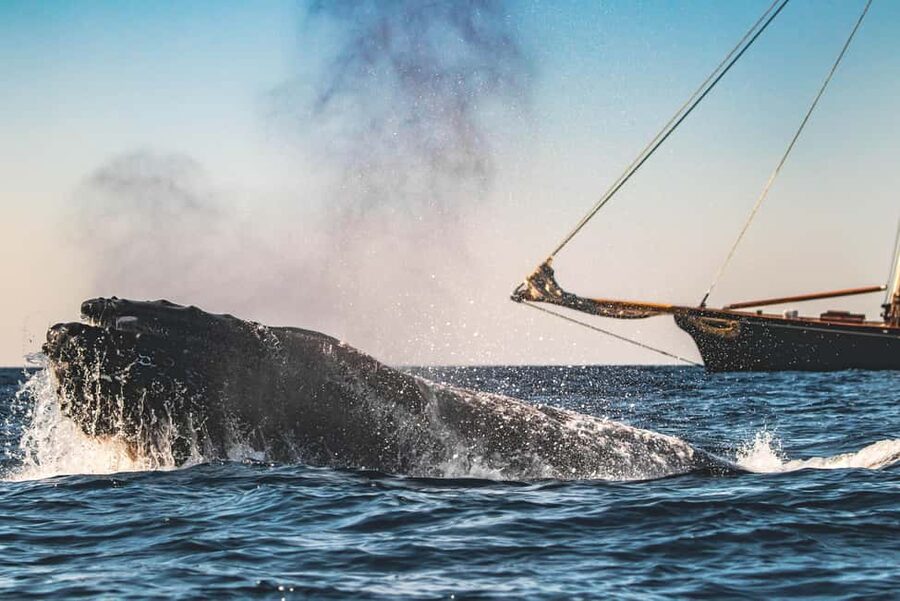
- Yacht America’s layout: low, sweeping decks that help you actually spot wildlife instead of just staring at the horizon
- Seasonal whale odds: gray, humpback, fin, and blue whale windows (plus dolphins and sea lions year-round)
- On-board comfort: roomy feel and a stable ride designed for long viewing
- Little perks that matter: complimentary snacks and non-alcoholic drinks, with crew support if weather turns
- Guarantees in the fine print: whale sighting and no sea sickness guarantees—plus an operator note for seasickness-prone riders
Checking In on Shelter Island: Finding 2050 Shelter Island Dr Fast
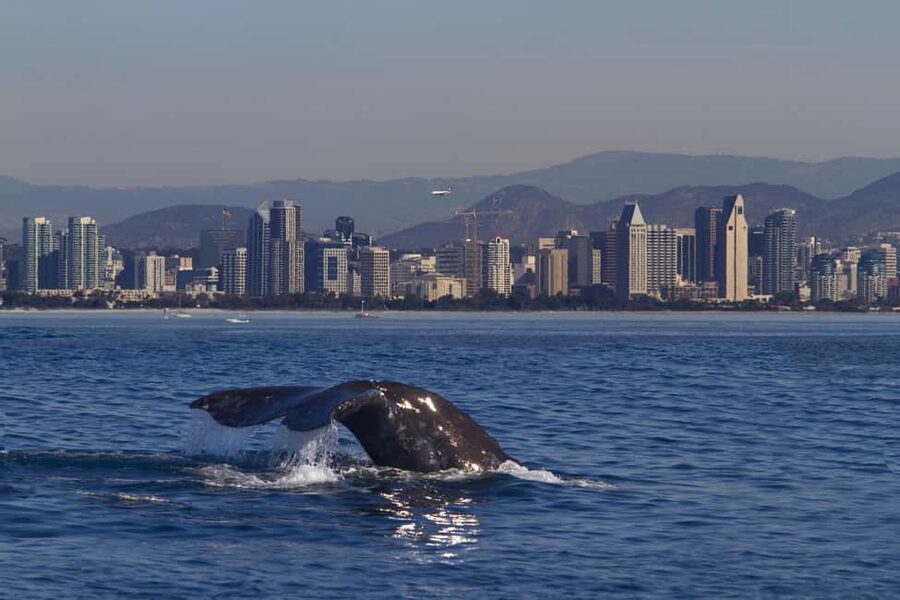
This tour starts at 2050 Shelter Island Dr, right by the free parking area. After you park, check-in is a grassy strip between the parking lot and San Diego Bay. The easiest navigation trick: look for the blue vertical flag that says Check-In. The flag goes up an hour before departure, so you can get oriented early without feeling rushed.
The biggest practical tip is simple: don’t cut it close. Boarding starts on schedule, and the crew will be timing departures tightly so the cruise stays on track. If you arrive early, stay nearby so you’re ready when they call your group. And if you’re unsure where to go once you’re on site, call for help before you start wandering the port.
Also worth planning for: you’ll be outside before departure and you’ll likely be scanning the water for long stretches. That means warm layers matter even on mild days. Bring a hat and sunscreen, and consider sunglasses too, because the water glare can be strong once you’re out at open view.
You can also read our reviews of more tours and experiences in San Diego.



Yacht America’s 139-Foot Sailing Style: Comfort That Helps You See More
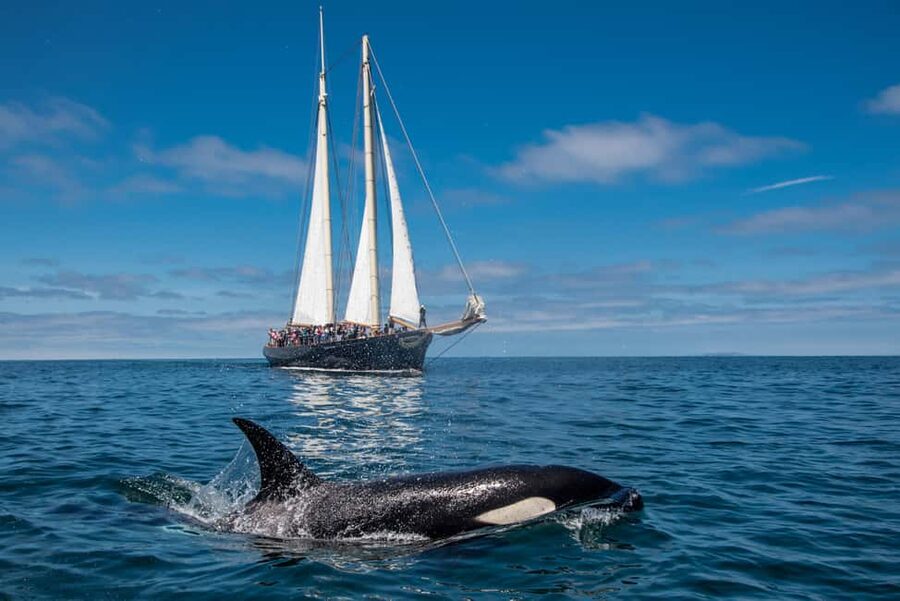
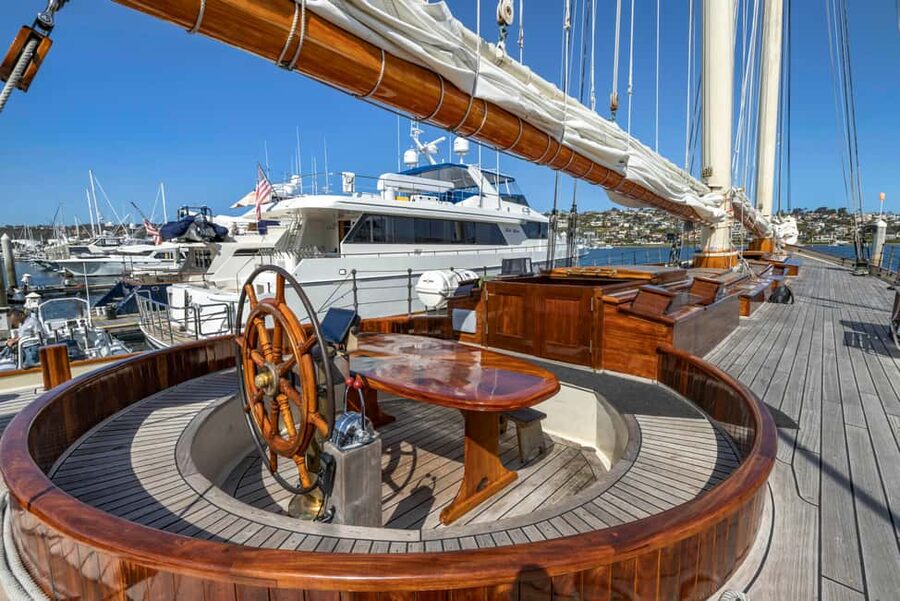
The star here is the yacht itself: the Yacht America, described as 139 feet (and sometimes listed around 141 feet). Either way, it’s built for comfort during long viewing, not like a cramped motorboat where everyone crowds one side.
What I like about this setup is that the boat’s low, sweeping decks let you see the water clearly. You’re not stuck standing behind tall railings or peering straight up, which is a common problem on some tours. The result is that you can focus on spotting spouts, movement, and surfacing timing.
Stability also matters. A calmer, steadier ride makes a big difference for the whole experience. One of the strong selling points is a no sea sickness guarantee, but there’s a catch you should take seriously: the operator also flags the cruise as not suitable for people prone to seasickness. So if you know you’re sensitive, treat that warning as real advice, not just legal language.
The 4-Hour Whale Watch: What the Time Actually Feels Like
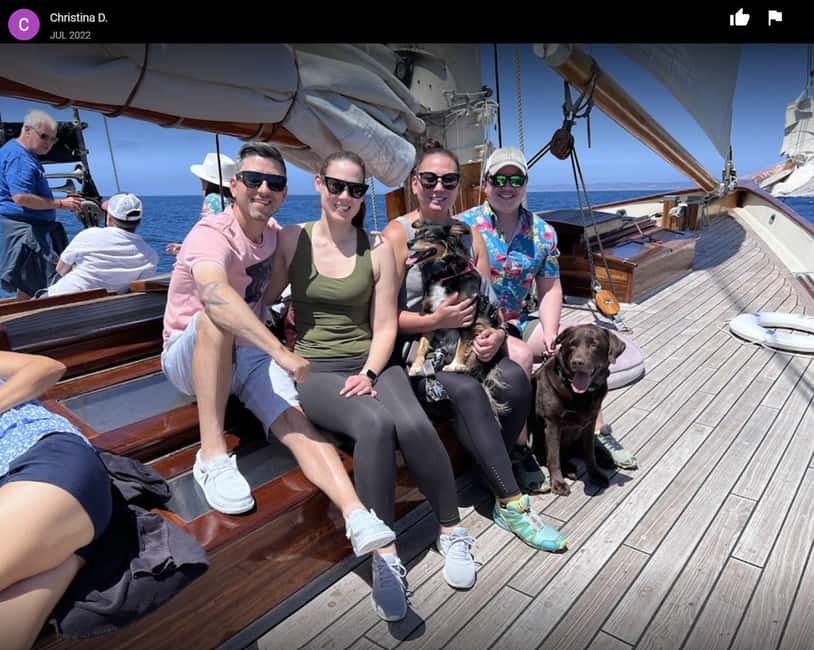
The cruise itself is a solid 4 hours of being out on the bay and ocean with wildlife spotting as the main event. The exact path isn’t laid out move-by-move, but the rhythm is consistent: you check in, board on time, then spend the afternoon watching from the decks while the crew searches and shares information.
Because you’re on a sailing yacht, you’ll likely feel a more natural pace than in a quick power-boat tour. That’s good. Whale watching isn’t only about getting from point A to point B—it’s about being in the right waters long enough to notice the signs: a subtle change in surface texture, a quick rise, or the brief moment when a spout breaks the skyline.
During the cruise, you should expect the guide/captain to help you look in smarter ways. The crew has 50 years of whale watching experience, and that shows in how they point out what to look for and when. On some departures, the crew has even handed out rain ponchos quickly when weather rolled in, which tells me they’re used to the realities of San Diego sea breezes.
What you might see (and why it’s not always guaranteed)
You’re on a wildlife cruise, not a guaranteed zoo trip. That’s why the tour includes both a whale sighting guarantee and a no sea sickness guarantee. Still, conditions change. If you don’t spot whales on your sailing, you can still end up with plenty of action—dolphins are a frequent star, and sea lions can pop up too.
One important lesson: don’t train your whole brain on one target. If you widen your watchlist to include dolphins and sea lions, you’ll usually come away happy even on a tricky whale day.
Seasonal Whale Forecast for San Diego Waters
San Diego is a year-round whale watching destination, and this cruise is structured around that. The operator’s seasonal guide is a helpful way to set expectations before you go.
Here’s the broad whale timing to keep in mind:
- Gray whales: mid-December through April
- Humpback whales: March
- Fin whales: April
- Blue whales: May and early summer (noted as the largest animal ever to live on Earth)
- Summer: a mix that can include fin, blue, humpback, and minke
- Fall: southbound humpback whale migration
If you’re planning for the biggest-ticket sighting—blue whales—May through early summer is the window to target. If you’re more focused on gray whales, plan for mid-winter into early spring.
Also keep your eyes open beyond whales. Or orcas, dolphins, and sea lions are on the lookout list, and you’ll likely get at least some variety in the marine life as you scan. The best whale watching days often feel like a chain reaction: whales might take time, but dolphins can start the show while you wait.

Snacking, Sips, and Crew Help: Small Comforts That Add Up
For a 4-hour cruise, the included comfort items matter more than you’d think. You get complimentary snacks and non-alcoholic beverages on board, which helps you stay comfortable without having to spend extra once you’re out there.
Alcoholic drinks are not included, so if that’s part of your typical “vacation mode,” plan accordingly. But for many people, the smarter move is to keep it light: you want alert eyes and a steady stomach for scanning and watching.
A couple details from real-world experiences show what the crew focuses on:
- When rain hits, the crew has been quick to provide rain ponchos so the experience doesn’t collapse into a sprint back inside.
- The crew has also shared photos after the sailing in at least one instance, which is great for turning a good sighting into something you can study later (and compare to what you saw from the deck).
And since it’s family-friendly with restroom facilities, you’re not stuck making a long “nature break” plan. That’s a genuinely underrated piece of comfort on a half-day cruise.
Price and Value: Is $95 Reasonable for Yacht America?
At $95 per person for a 4-hour whale watching cruise, the value comes from how much is bundled into your ticket.
You’re paying for:
- A premium-feeling vessel (Yacht America, 139-foot class sailing yacht)
- A long enough window to actually spot wildlife (4 hours)
- Complimentary snacks and non-alcoholic drinks
- A crew backed by 50 years of whale watching experience
- Free parking on-site
- Whale sighting and no sea sickness guarantees
Where it can feel less “value-perfect” is the nature of whale watching itself. You’re buying a high-quality search-and-spot experience, not a guaranteed whale appearance. That said, the cruise includes dolphins and sea lions in the expectation set, and the guarantee means the operator is trying to make your time count.
If you’re deciding between a cheaper, shorter cruise and this one, I’d steer you toward the longer, more comfortable option if your goal is actually seeing wildlife—not just getting out on the water for a photo op.
Who Should Book This Cruise (and Who Should Skip It)
This is best for you if:
- You want a comfortable, stable ride where spotting is part of the fun
- You like the idea of sailing-deck viewing instead of crowding one tiny platform
- You’d enjoy seeing a range of marine animals (not only whales)
- You appreciate onboard extras like snacks and non-alcoholic beverages
It may not fit if:
- You’re prone to seasickness. Even with the no sea sickness guarantee, the operator says it’s not suitable for people like that. If you know you’re sensitive, take the warning seriously.
- You only want one specific animal. On some days, you might get dolphins and seals without whales, and that can still be a good cruise—just not necessarily your exact target.
Family-wise, it’s a solid choice. Restrooms are available, the boat has a spacious feel, and the format is straightforward: check in, cruise, return. If you’re traveling with kids, this is one of those activities that works because the pacing is easy.
Should You Book the San Diego Yacht America Whale Watching Cruise?
Book it if your priority is a comfortable half-day at sea with real spotting help and a crew that handles weather and timing like it matters. I’d especially recommend it if you’re going during a meaningful whale window—gray whales in winter into early spring, humpback in March, fin in April, and blue whales in May through early summer.
Hold back only if you already know you get sick on boats. Otherwise, this cruise is a strong bet because it stacks the experience in your favor: stable yacht, low-deck viewing, snacks and non-alcoholic drinks included, and a dedicated guarantee framework.
If you’re the type who can enjoy the whole marine scene—dolphins, sea lions, and the hope of whales—this will likely feel like a very good use of your time in San Diego.
FAQ
Where does the whale watching cruise depart from?
The meeting point is at 2050 Shelter Island Dr, next to the free parking area, in a grassy area between the parking lot and San Diego Bay. It’s marked by a blue vertical Check-In flag.
How early should I arrive for check-in?
The check-in flag goes up an hour before departure time. You should arrive with enough time to check in and get settled, and be ready to board on schedule.
How long is the cruise?
The whale watching cruise lasts 4 hours.
What’s included in the ticket price?
Included are the 4-hour whale watching cruise, snacks and non-alcoholic beverages, free parking, and the crew’s 50 years of whale watching experience. Also included are the whale sighting guarantee and the no sea sickness guarantee.
Are alcoholic beverages included?
No. Alcoholic beverages are not included.
What should I bring?
Bring warm clothing, a hat, a camera, sunscreen, comfortable clothes, and a charged smartphone.
Is there free parking?
Yes. Free parking is available near the meeting point.
Is this tour suitable if I get seasick easily?
The activity is not suitable for people prone to seasickness, even though the cruise offers a no sea sickness guarantee.
When is the best time to see blue whales?
The best time to see blue whales is from May and early summer.