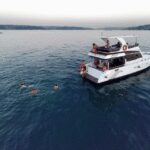
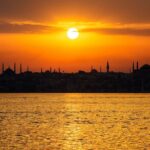
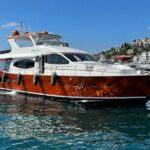
Istanbul’s Bosphorus hits you fast. This 2-hour luxury yacht cruise mixes big-city landmarks with real strait history, and I really like the way it pairs sightseeing with included snacks and Turkish tea. One thing to consider: it’s not ideal if you get motion sickness, since the route is on open water.
The value here is strong for the price. You get a licensed guide, a small group capped at 30, and a clear plan that covers both palace glamour and fortress grit without turning your afternoon into a marathon.
The biggest drawback is also the most basic one: the experience depends on good weather, and it’s not recommended for people with vertigo or a strong tendency to seasickness.
In This Review
- Key highlights you’ll feel right away
- Why the Bosphorus works so well in a 2-hour cruise
- Getting aboard in Beyoğlu and settling into the afternoon pace
- Food and drinks: included snacks that make the ride feel complete
- Dolmabahçe Palace: Ottoman grandeur from the waterline
- Çırağan Palace: marble elegance and a darker Ottoman chapter
- Ortaköy, the bazaar energy, and the Bosphorus Bridge view
- Bebek: classic waterfront neighborhood vibes and views that feel expensive
- Rumeli Hisarı: a fortress built in 3 months, now for concerts
- Fatih Sultan Mehmet Bridge: the skyline shift you’ll notice immediately
- Anadolu Hisarı: the other fortress at the narrowest point
- Küçüksu Pavilion and Beylerbeyi Palace: summer residences with garden calm
- Galata Tower, Galata Bridge, and the “Istanbul everyday” photo moments
- Maiden’s Tower: legend on a tiny island and a skyline icon
- Value check: is $35.39 worth it?
- Who should book this cruise, and who should skip it
- Should you book the Bosphorus Guided Afternoon Cruise?
- FAQ
- How long is the Bosphorus guided afternoon cruise?
- What’s the price per person?
- What time does the tour start, and where does it end?
- Is there alcohol included?
- What language is the tour offered in?
- What’s included with the cruise?
- How big is the group?
- Is the cruise suitable for people with vertigo or seasickness?
- What’s the cancellation policy?
- What if weather is bad?
Key highlights you’ll feel right away
- Small-group luxury vibe with a max of 30 people and a relaxed pace
- Real Bosphorus context (it’s literally the gateway between Asia and Europe)
- Included refreshment setup: tea, lemonade, water, fruit plates, cookies, and baklava
- Photo-ready landmarks from multiple angles of palaces, bridges, and fortresses
- Practical guide support in English, plus a thoughtful itinerary flow
Why the Bosphorus works so well in a 2-hour cruise
Two hours sounds short until you’re on the water. The Bosphorus is only about 30 kilometers long, but it’s a dramatic corridor: it separates Istanbul’s European side and Anatolian side, and it connects the Sea of Marmara with the Black Sea. The guide’s job is to make all that geography matter to your eyes, not just your ears.
One detail I appreciate is how the Bosphorus behaves as a waterway. There are surface currents that flow from the Black Sea toward the Marmara, while deeper water flows the other way. That kind of layered movement helps explain why the water can feel different in different stretches—so you’re not just thinking this is scenic; you’re also understanding the strait’s “engine.”
At this length, you’ll get a well-paced overview of the most famous waterfront stretches, plus enough stops that you can orient yourself for the rest of your trip. If you’re staying in Istanbul for a few days, this cruise is the kind of thing that helps the city click.
You can also read our reviews of more tours and experiences in Istanbul.
Getting aboard in Beyoğlu and settling into the afternoon pace
The meeting point is Türkiye Petrolleri, Ömer Avni, Meclis-i Mebusan Cd. No:34, 34427 Beyoğlu/İstanbul. Tours start at 1:00 pm and you finish back at the same place, so you’re not stuck figuring out transport at the end.
You also get a mobile ticket, which is nice in a city where paper tickets can feel like extra baggage. The tour runs in English, and the group size stays intimate with a maximum of 30. That matters because you’ll spend less time waiting and more time actually watching the shoreline.
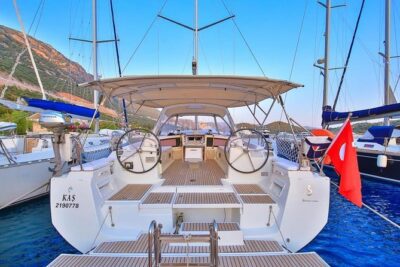
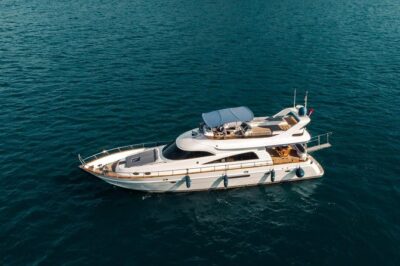
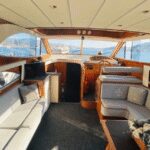
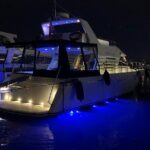
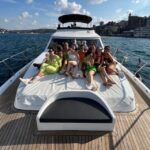
You’ll be on a luxury yacht, but the style is still practical: included snacks and drinks mean you don’t have to spend the whole ride hunting for a caffeine fix or a sweet bite.
If you’re prone to seasickness, take that seriously. The operator specifically flags that it’s not recommended for people who are likely to feel unwell on boats. Bring your own coping plan if you need one.
Food and drinks: included snacks that make the ride feel complete
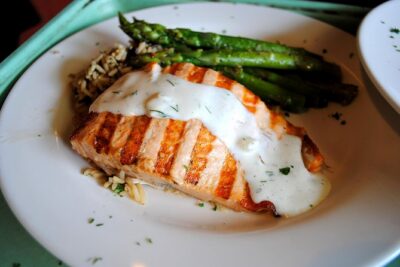
This cruise is not just about views. You’ll also get a set refreshment package: cookies, baklava, Turkish tea, lemonade, fruit plates, and water. No alcohol is included, and the minimum drinking age is 18+ if anything is offered beyond what’s listed—so plan on soft drinks and tea as your default.
What I like about including tea and a sweet is that it fits Istanbul. You’re seeing palaces and bridges, but you’re also doing the small everyday thing—tea and a bite—so the whole afternoon feels more like being hosted than like doing a checklist.
It also keeps the experience balanced. With food provided, you can stay focused on the shoreline instead of timing breaks around a café queue.
Dolmabahçe Palace: Ottoman grandeur from the waterline
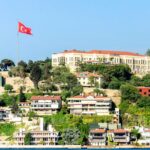
The cruise brings you past Dolmabahçe Palace, an Ottoman palace set on a huge waterfront area in Beşiktaş. What’s useful here is the placement: it’s on the left bank as you enter the Bosphorus from the Sea of Marmara, opposite Üsküdar and Kuzguncuk.
From the water, palace design reads faster. You don’t have to decipher details up close, and you don’t need an entire museum day. You get the overall statement—power and wealth held along the water like a signature.
A practical note: palaces are famous for crowds and long lines when you visit them on land. Here, you get the “I recognize this” moment without committing to a full palace ticket day.
Çırağan Palace: marble elegance and a darker Ottoman chapter
Next is Çırağan Palace, commissioned by Sultan Abdulaziz and designed by Sarkis Balyan. The location matters because it rises from a place with earlier layers: it was built on the site of a wooden summer palace built by Selim III in 1800.
What I like is how the guide’s framing can balance beauty and consequence. Çırağan was completed in 1871, made of marble, and spread over about 80,000 square meters. Then history turns: after Abdulaziz was deposed, he was imprisoned there with his family; later, Murat V faced imprisonment there for years with his family as well.
Later uses also show up in the story. After 1908, it served as the House of Parliament, but it was damaged by fire in 1910. The grounds were later used by Beşiktaş Sports Club (including the Seref Stadium). In the early 1990s it reopened as a luxury hotel after restoration.
On the cruise, you’re not doing a deep interior visit. But you are getting the key narrative: this wasn’t just a pretty residence—it was a stage for Ottoman politics. That makes the waterfront look more meaningful.
- Bosphorus Yacht Cruise with Stopover on the Asian Side – (Morning or Afternoon)
★ 5.0 · 1,657 reviews


Ortaköy, the bazaar energy, and the Bosphorus Bridge view
The stop at Ortaköy is about atmosphere as much as architecture. Ortaköy sits on the European shore in Beşiktaş, on slopes above the Bosphorus. It’s known for the Ortaköy Bazaar—souvenir shops, cafes, bars, and restaurants—and for its lively feel through the day.
Just plan your expectations. The bazaar is lively, but early hours can feel slower. Since this cruise runs in the afternoon (starting at 1 pm), you’re likely to catch the part where things start moving.
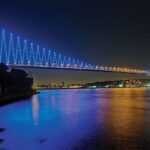
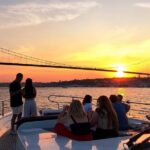
Then comes one of the best quick photo angles: the feet of the Bosphorus Bridge. This suspension bridge is one of two on the Bosphorus, and it connects Europe and Asia. It began in 1970 and opened on Oct 29, 1973, marking the 50th anniversary of the Republic.
I like that the guide connects the bridge to modern Istanbul too. It’s part of daily transportation, and it also plays a role in the Istanbul Eurasian Marathon route. Even if you’re not running, you get how the Bosphorus has evolved from waterway to city infrastructure.
Bebek: classic waterfront neighborhood vibes and views that feel expensive
Bebek is another European-side highlight. The word Bebek literally translates to baby, which is likely why people remember the name. It’s a historic Ottoman-era neighborhood, surrounded by Arnavutköy, Etiler, and Rumeli Hisarı.
Today, Bebek is known for waterside mansions, historical sites like Bogaziçi University, and restaurant life facing the water. From a cruise, you’re not trying to tour everything. You’re letting the waterfront rhythm do the work: homes, gardens, and the slope of the coast all fall into place in a way that’s harder to see from street level.
Rumeli Hisarı: a fortress built in 3 months, now for concerts
On the European shore, the itinerary brings you to Rumeli Hisarı (Rumeli Fortress) in Sariyer. It was constructed directly across from the Anatolian Fortress at the narrowest point of the Bosphorus, ordered by Sultan Mehmed the Conqueror.
The timeline here is striking: construction began in 1453 and was completed in about three months. The location is strategic for naval attacks, and after the conquest, it became an inspection point for maritime traffic passing through the Bosphorus.
If you visit ruins on land, you often get the stones. Here, you get the context of why these stones mattered. Over centuries, the fortress area filled with small wooden houses, but during restoration work in 1953 those houses were removed. After restoration, the fortress became known for concerts in summer and now serves as an open-air theater and museum.
Even if you only take a look from the water, it helps you understand the Bosphorus as a contested corridor, not just a scenic one.
Fatih Sultan Mehmet Bridge: the skyline shift you’ll notice immediately
You’ll also see the Fatih Sultan Mehmet Bridge (Fatih Sultan Mehmet Köprüsü)—Istanbul’s second Bosphorus bridge. Construction began in 1986 and it opened on July 3, 1988.
This bridge matters because it’s not just a landmark. It’s a major artery carrying trans-Bosphorus traffic alongside ferries and the earlier Bosphorus Bridge. The guide’s context here helps you connect the skyline to function: Istanbul’s beauty and its engineering share space.
If you like photography, this is one of those stretches where the city suddenly looks different. Steel suspension lines change the feel of the whole view.
Anadolu Hisarı: the other fortress at the narrowest point
On the Anatolian side, the cruise includes Anadolu Hisarı (Anatolian Fortress) in Beykoz. Built in 1395 by Beyazıt I, it consists of a citadel and outer castle walls at the Bosphorus narrowest point.
After the conquest of Istanbul, it lost some strategic importance and became a military hospital. Over time, the surrounding area filled in with waterfront houses and old mansions among the ruins.
Restoration from 1991 to 1993 turned it into a museum, but with a limitation: it’s not open to the public in the same way as many attractions, and today you can visit only the outer walls. Also, the road passes right through it.
From a cruise perspective, that still works. You’re seeing how the fortress sits in a living neighborhood, not isolated in a theme-park bubble. That’s an important Istanbul lesson.
Küçüksu Pavilion and Beylerbeyi Palace: summer residences with garden calm
The itinerary includes Küçüksu Pavilion museum. Ottoman emperors used it as a summer palace and hunting lodge. That “summer escape” use-case is exactly why this part of the Bosphorus feels different than the fortress zones: it’s about leisure and control of one’s view.
Next is Beylerbeyi Palace, an Ottoman summer palace complex built in the 1860s on the Bosphorus shores. It lies right under the Bosphorus Bridge. The architect was Sarkis Balyan, and the palace blends elements from renaissance, baroque, and other influences from both East and West.
The description you get matters because it tells you what to look for. The main building is a two-store structure in stone on a high basement. It covers about 2,500 square meters and includes multiple halls, rooms, and even a hamam. And outside, there’s a lily pond and large gardens—perfect for a slow visual break even if you can’t wander like you would in a full land visit.
One practical tidbit to remember: if you’re on a Monday, museums can have different opening hours. The operator can provide an alternative stop if closure affects this part of the schedule, keeping your time productive.
Galata Tower, Galata Bridge, and the “Istanbul everyday” photo moments
The cruise also layers in iconic views of Galata Tower. Built by Genoese in 1348, it stands about 66.90 meters and was the tallest building in the city when it was first constructed. In the Ottoman era, it had uses like a fire observatory and a jail. It’s also famous for Hezarfen Ahmet Çelebi gliding across the Bosphorus to Üsküdar in 1632 using self-constructed wings.
The tower’s top was damaged in a 1875 storm and later restored in the 1960s, when the wooden interior was replaced with a concrete structure. Today it’s open to the public and includes a restaurant and café on the upper floor. Even without going inside, it’s a strong skyline anchor.
Then there’s Galata Bridge (Galata Köprüsü), crossing the Golden Horn. It began in 1845 and has changed over time, including a rebuild after a fire in 1992. The older version was moved to Halic. From this area, you get the vibe of daily Istanbul: restaurants and cafes below, trams and pedestrians above, plus fishermen and ferries in the same view line.
Maiden’s Tower: legend on a tiny island and a skyline icon
No Bosphorus storytelling is complete without Maiden’s Tower (Kız Kulesi). It sits on a tiny island about 200 meters from Üsküdar’s shore and is the subject of legends.
The best-known one is the oracle story: a sultan’s daughter is predicted to die from a snake bite on her 18th birthday. The tower is built so she can live protected in secrecy. On her birthday, a basket of fruit includes a hidden snake, and the story ends the way the prophecy says it would.
Even if you’re not into legends, the tower is a visual target. It’s small compared with palaces and bridges, which makes it easy to remember later when you’re looking at photos of Istanbul’s skyline.
Value check: is $35.39 worth it?
At $35.39 per person for about 2 hours, the value mostly comes from what’s packaged together. You’re paying for: a licensed guide, a luxury yacht ride, a tight group size, English-language narration, and a ready-to-eat set of snacks and drinks.
For Istanbul, where you can easily burn an entire day bouncing between paid entries and costly transport, this is a cost-control win. You’re buying time on the water and the explanations that make the waterfront feel coherent.
It’s also good value if you’re doing other sights during your trip. This cruise acts like orientation plus drama. After it, you’re more likely to recognize waterfront neighborhoods and know what you’re looking at.
Who should book this cruise, and who should skip it
This is a great match if you want:
- a quick, scenic Bosphorus primer
- palace-and-bridge views without full-day museum fatigue
- included tea and snacks so you can stay relaxed
It’s a weaker match if:
- you’re prone to seasickness
- you have vertigo
- you need long, in-depth land visits (this is paced for the water)
If you’re traveling with friends and want everyone to have the same “wow” moments—bridges, fortresses, and skyline icons—this itinerary does that job.
Should you book the Bosphorus Guided Afternoon Cruise?
I’d book it if you want a high-comfort, fast way to understand why the Bosphorus matters—geography, empire, and city life all in one afternoon. The included refreshments are a real plus, and the small group size keeps it from feeling like a cattle call.
Skip it only if you know boat motion will hit you hard or if vertigo is a dealbreaker. If that’s you, you may still want a land-based tour instead.
If you’re comfortable on water and you’re in Istanbul around that 1 pm window, this is the kind of experience that makes the rest of the city easier to enjoy.
FAQ
How long is the Bosphorus guided afternoon cruise?
It’s about 2 hours.
What’s the price per person?
The price is $35.39 per person.
What time does the tour start, and where does it end?
It starts at 1:00 pm and ends back at the meeting point.
Is there alcohol included?
No. Alcoholic beverages are not included.
What language is the tour offered in?
The tour is offered in English.
What’s included with the cruise?
Included are snacks and drinks plus a professional licensed tour guide: cookies, baklava, Turkish tea, lemonade, fruit plates, and water.
How big is the group?
The maximum group size is 30 travelers.
Is the cruise suitable for people with vertigo or seasickness?
It’s not recommended for people with vertigo, and it’s also not recommended for people prone to seasickness.
What’s the cancellation policy?
You can cancel for a full refund up to 24 hours before the experience starts.
What if weather is bad?
The experience requires good weather. If it’s canceled due to poor weather, you’ll be offered a different date or a full refund.